

A strong portfolio should be easy to explore and feel like an honest reflection of who you are. Before choosing colors, fonts, or layouts, think about what you want visitors to learn about you and which work best supports that message.
Organize Your Work
Make it easy for visitors to move through your portfolio and understand where to find information. A simple portfolio can have these main pages:
- Home: Introduce yourself, explain what you do, include a few examples of your strongest work.
- Projects: Show the work that represents your skills and interests
- About Me: Share a little about yourself, your interests, and your future goals
- Resume: Provide an overview of your education, experience, and skills
- Contact: Tell visitors how they can connect with you
Place your strongest and most important work near the beginning. You can also group similar projects together so visitors do not have to search for them.
Explain Each Project
Give each project a short introduction so visitors understand what they are seeing and why it is important. Focus on the most useful details instead of explaining everything.
Include:
- What the project is about
- Why you created it
- What you were responsible for
- What skills you used
- What you learned from the experience
If you worked with a group, clearly describe your contribution. You can also include early ideas or progress images to show how the project developed before presenting the finished work.
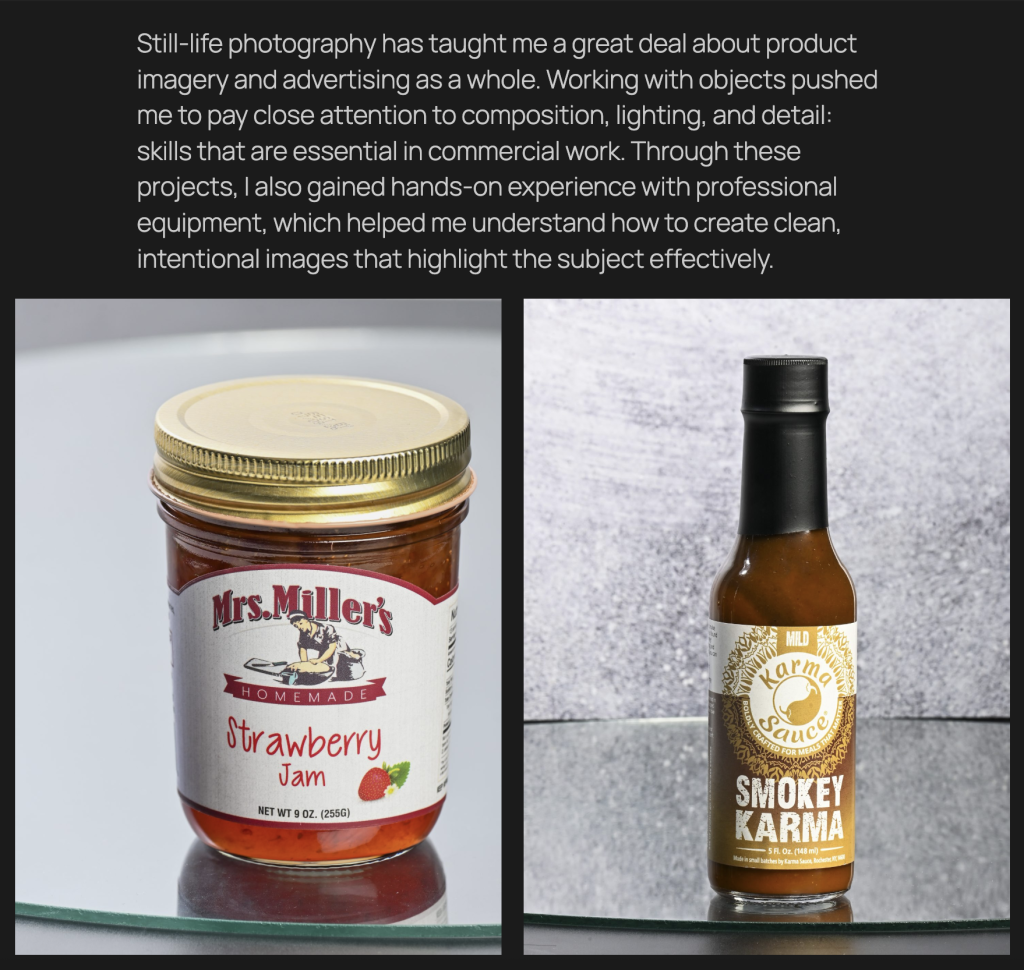
Imagine that you are explaining the project to someone who has never seen it before. Use clear language, short paragraphs, and helpful images to make the story easy to follow.
Choose a Visual Style
Choose a style that fits your personality and the kind of work you want to share. Your portfolio should look organized and make your work easy to see.
To create a clear and consistent design:
- Choose two or three colors that look good together
- Use one or two fonts that are easy to read
- Leave enough space between different sections
- Use clear, high-quality images
- Make sure the text is easy to see against the background
Choose Your Language and Tone
Write in a way that feels natural, friendly, and professional. Keep your wording simple and direct. Avoid sentences that are too long.
Before publishing, read your writing and ask:
- Is it clear and easy to understand?
- Is the tone consistent on every page?
- Are the spelling and punctuation correct?
Too Casual
“I made this cool poster for class.”
Too Formal
“This artifact demonstrates my proficiency in visual communication.”
Balanced
“I designed this poster to communicate information clearly and creatively.”
Consistent writing makes your portfolio easier to follow and gives visitors a clearer picture of who you are.
Protect Your Information
Your portfolio may be viewed by many people, so think carefully about the personal information you share. Include only the details visitors need to understand your work and contact you professionally.
Avoid sharing:
- Your home address
- Private documents or school records
- Personal phone numbers you do not want made public
✓ Safe to Share
✓ Professional email address
✓ City and state
✓ Education and experience
✓ Skills and public projects
✓ Professional social links
🔒 Keep Private
✕ Home address
✕ Personal phone number
✕ Student ID or school records
✕ Other people’s private details
If your work includes other people, ask for permission before sharing their names, photographs, or personal details.